Sri Lanka Vs Bangladesh Test Series 2024


After a closely fought T20 and ODI series, much was expected in the recently concluded test series between Sri Lanka and Bangladesh. But the visitors claimed the test series 2-0 with some ease. Bangladesh failed to put up a true fight in the series. Bangladesh had played their first test match in the year 2000 against India, and it has been now 24 years since then. But the Bangladesh team is yet to make a strong statement in the Test arena. They have produced some strong individual performances but failed to do it consistently and perform as a team. Srilanka on the other hand had put up a spirited display in the t2 test match series. Srilankan pacers performed exceedingly well and played an important role in their series win. Along with pacers, Srilankan batsmen also performed well and showed patience and class in crunch situations.

Rajitha Fernando


First Test, Sylhet

The first test in the series against Srilanka was played at Sylhet. In the first innings, Bangladesh started strongly, when they had Srilanka 57/5 at one stage of the innings. But Dhananjaya Desilva and Kamidu Mendis went on to score centuries, to lift the Srilankan score to 280. Khaled Ahmed and Nahid Rana picked up 3 wickets each for Bangladesh. Now, it was a good performance from the Bangladesh bowlers as they had restricted Srilanka to below 300. It was a good chance for Bangladesh to surge ahead in the match. But the Bangladesh batsmen failed to read the Srilankan pacers and were all out for 188. Taijul Islam (47) and Litton Das were the top scorers of the innings.


Mominul Haque

 Vishwa Fernando picked up 4 wickets for Srilanka, while Kasun Rajitha and Lahiru Kumara picked up 3 wickets each. So Srilanka had a lead of close to 100 in the first innings and the pitch has given some aid to the pacers. In the second innings, once again Kamidu Mendis (108) and Dhananjaya Desilva (164) scored centuries to take the second innings score to 418. Mehidy Hasan Miraz picked up 4 wickets. But the pitch had more help to the pacers, and they could have performed better. Nahid Rana and Taijjul Islam picked up two wickets each, while Shoriful Islam and Khaled Ahmed picked up 1 wicket apiece. Chasing a target of 511 runs, Bangladesh could only score 182 runs. Only Mominul Haque put up a fight when he scored 87 runs and remained not out. Five Bangladesh batsmen were out for a duck. At the end of day 4 of the match, Srilanka won the match by a huge margin of 328 runs. Kasun Rajith picked 5 wickets, while Vishwa Fernando and Lahiru Kumara scalped 3 and 2 wickets in the second innings. Interestingly 20 Bangladesh wickets were picked by Srilankan pacers. 


Dhananjaya DeSilva


Second Test, Chattogram

After the dismal performance in the first test, the Bangladesh team had a chance to draw the series. But Srilankan batsmen once again batted beautifully and posted a huge first-innings score of 531. Kusal Mendis and Kamindu Mendis missed their centuries by a margin of less than 10 runs. 6 Srilankan batsmen crossed the half-century mark in the first innings. Shakib Al Hassan picked up 3 wickets. Once again Bangladesh batsmen failed miserably and could muster just 178 runs. Only 1 Bangladeshi batsman Zakir Hasan crossed half century mark. Once again the Srilankan pacers picked 8 off the 10 wickets. Asitha Fernando picked 4 wickets. Bangladesh had conceded a huge first-innings lead of 353 runs. Srilanka declared their second innings on the score 157/7, with Angelo Mathews scoring 56. Mahmud Hasan picked up 4 wickets for Bangladesh. Once again Bangladesh was set a target of 500 excess and writing was on the wall. But this time Bangladesh batsmen performed reasonably well and went on to score 318 runs. Mominul Haque (50) and Mehidy Hasan Miraz (81*) made half-centuries for Bangladesh. Lahiru Kumara picked 4 Bangladeshi wickets. Kamindu Mendis picked 3 wickets. 

Kamindu Mendis


South Africa Vs Zimbabwe 1999 World Cup

On May 29, 1999, South Africa, the competition's favourite, and Zimbabwe squared off in a world cup match. Zimbabwe was having a great tournament, putting up challenges against nearly every opponent. It was Zimbabwe's final and most important group stage match, and a Zimbabwean victory would mean the tournament's hosts, England, would be eliminated. Since South Africa had already advanced to the super six stage as the group leader, it wasn't a huge concern for them.

Zimbabwe got off to a strong start as they batted first, combining for 65 and 66 runs for the first and second wickets, respectively. Neil Johnson opened the batting and anchored their innings together. Zimbabwe were on 170/3 when he was removed as the third wicket after a superb 76-run innings. Eventually, Allan Donald took three wickets for 41 runs as they reached 233/6 in their fifty overs.

  It was not a game that South Africa had to win, as was previously said. But they undoubtedly felt differently after the conclusion of the competition. South Africa began their innings needing 234 to win, and things rapidly went south for them as Heath Streak and Neil Johnson destroyed the South African top order, leaving them at 6 for 40. It all started when, Gary Kirsten was dismissed of the first ball of South African innings, by Neil Johnson. Shaun Pollock then started working with Daryll Cullinan. In tandem, the two were able to raise some hope for the South African innings very gradually. But with the score at 106, Andy Whittall ended a 66-run partnership by removing Cullinan with a catch off his own bowling. Even yet, South Africa's chances remained intact when the player who was arguably the most valuable in the format at the moment entered the bat at number nine. When Lance Klusener, at the height of his abilities, joined Pollock, they were able to continue the repairs.

Neil Johnson

They succeeded in adding 43 runs to the total, and South Africa needed to score 85 more runs to win at the beginning of the 42nd over. Was not a simple task. while keeping in mind who was batting at the moment in part. But that was the moment when Andy Whittall broke the partnership once more, dismissing Pollock for 52 runs. The South African score was then increased by one run, and they lost the ninth wicket. But Lance Klusener was determined to fight to the death. He gave it his all throughout the battle. But it was a losing combat, as Klusener was undefeated at 52 and the South African innings ended in 47.2 overs with the score at 185.  For Zimbabwe, Heath Streak (3 wickets) and Andy Whittall (2 wickets) were able to offer outstanding support to a player who has all the makings of a cricket champion.  Only three South African batsmen could reach double figures, while the rest failed miserably.

Neil Johnson was the one who opened the Zimbabwean bats and took bowls. Johnson not only scored 76 runs at bat but also had the best bowling statistics for Zimbabwe, 3 for 27. Regretfully, his premature retirement prevented his career from reaching its full potential for both Zimbabwe and the sport as a whole. For Zimbabwe, this victory signified two things. Zimbabwe first earned their spot to the Super Six round and then eliminated England from the competition simultaneously. Even though it wasn't obvious at the time, as indicated above, this defeat affected South Africa's performance in the competition.

 If they had prevailed, they would have advanced to the super six round with two extra points, which would have moved them ahead of Pakistan and Australia in the standings. Now let's fast-forward to the two teams' historic semifinal match, which concluded in a draw. Australia advanced to the championship game because they finished higher on the super six points chart. As a result, this game was more important than it first seemed. Though they entered the tournament as one of the favourites, most of the time we believe South Africa was unfortunate not to make the finals at least once when we reflect on their world cup performances.  However, upon closer examination, it turns out that these minor details had a greater influence on South Africa's fortunes in world cup history than did chance.


Faiz Fazal


Indian Cricket player Fais Fasal announced his retirement from all formats of the game. Faiz Fasal got to play only in a lone ODI game for India. Despite scoring a half-century in the match, he never got to play in another international match for India. In the domestic arena, he played for Vidarbha. The left-hander amassed 9,184 runs at an average of 41 in 138 first-class matches. In IPL he was part of the Rajasthan Royals team in the 2009-11 season.

Faiz made his debut for India in 2016, under the captaincy of MS Dhoni. But by the time he made his debut, he was in his thirties. In the 3rd ODI match of the series, Indian bowlers restricted Zimbabwe to 123 runs. In reply, Faiz Fazal (55*) along with KL Rahul (63*) sailed to victory in 21.5 overs without any loss of wicket. Vidharbha won their maiden Ranji title in the 2017-18 season under the captaincy of Faiz Fazal. Early in his career, Faiz Fazal missed out on being a part of the U19 World Cup squad in 2004 when an injury forced him out of the squad. However, his replacement Shikhar Dhawan made the most of the opportunity and went on to become the tournament's highest run scorer.

Faiz Fazal


Interestingly, the Indian pacer Barinder Sran too, hasn’t played for India since featuring in the same match of the ODI series in 2016. The Indian batter Karun Nair’s last ODI was also in the same series. He too hasn’t played for India in ODIs since the 2nd match of the ODI series.

Left Handed Batsmen

 
Greatest Left-Handed Batsmen of the 90s

Sachin Tendulkar, Aravinda De Silva, Ricky Ponting, Rahul Dravid, Inzamamul Haq, Jacques Kallis, the list of right-handed batsmen who have reigned the cricket arena in the 90s is somewhat a long one. Team Predictors here make an effort to describe some of the great left-handed batsmen from each major team of the 90s.


1. Brian Lara(WI)

The West Indian great is undoubtedly one of the best to ever play cricket for the West Indies. He played 131 Tests for the West Indies. He made 11,953 runs at an average of 52.89. Lara held the record for the highest ever test score by a batsman, when he scored 375 against England in 1994. He held the record for a long time until Matthew Hayden of Australia made 380 against Zimbabwe in 2003. But Brian Lara once again broke the record by scoring a whopping 400 against England in 2004. Lara played 299 ODI for West Indies and made 10,405 runs at an average of 40.17. Lara holds the record of scoring the most runs in an over in Test cricket. He scored 28 runs off an over from the South African spinner Robin Peterson. The match-winning innings of Lara, where he scored 153* versus Australia in 1999 at Barbados is regarded by Wisden as the second-best ever test innings.

Brian Lara

2. Sourav Ganguly (IND)

Sourav Ganguly made a dream entry to the test arena when he scored a century on his debut at Lords in 1996. Sourav Ganguly is considered to be one of the greatest Indian Cricket team captains. He led India to the semifinals in the 2003 World Cup. Along with Sachin Tendulkar, he formed a formidable opening pair in ODIs. Ganguly was known for his big-hitting capabilities. The Southpaw 11,363 runs from 311 ODI matches at an average of 41.02. In test format, he compiled 7212 runs at an average of 42.17. Ganguly. Ganguly was known for his dominance on the offside. Once Rahul Dravid famously remarked that first there is God on the offside and then there is Ganguly.

Sourav Ganguly


3. Sanath Jayasuriya (SL)

Interestingly, Sanath Jayasuriya was included in the team as a spinner. But the left-arm spinner later went on to become the mainstay of Srilankan's batting lineup. The 1996 World Cup saw a new strategy from the Lankan team management, where the openers Sanath Jayasuriya and Romesh Kaluwitharna made most of the fielding restrictions in the first 15 overs. The opening pair went after the bowling and made quick runs in the initial overs. Sanath, 'The Matara Marauder' was known for his sweet timing and cut shots. His attacking style of play helped him dominate any bowlers in the world. He scored 13,430 runs from 445 ODIs at an average of 32.36. In tests, he scored 6973 runs at an average of 40.07.

Sanath Jayasuriya


4. Saeed Anwar (PAK)

Saeed Anwar is considered one of the greatest opening batsmen of his era. The Pakistan opener held the record for the highest ODI individual score when he scored 194 runs against arch-rival India in 1997. The stylish batsman had a trademark flick shot. He scored 8,824 runs from 247 ODI at an average of 39.21. In test format, he scored 4,052 runs at an average of 45.52 in 55 matches. He scored 20 centuries in ODIs and 11 in Tests.

Saeed Anwar


5. Matthew Hayden (AUS)

Even though Matthew Hayden was picked for Australia's England Tour in 1993, he had to wait till 1994 to play his first test match. Again he got to play his second match in 1996-97 against West Indies. The star-studded Australian batting line-up was difficult to be intruded into. The imposing left-hander was a prolific run scorer in the domestic circuit. But he couldn't reciprocate the same in the international arena in his initial matches. 2001 Indian tour changed the fortune of Hayden He scored 549 rund from 3 test matches at an average of 109. Since then he became a regular face in the Australian lineup until his retirement. Hayden scored 6,133 runs from 161 matches at an average of 43.80. In 103 test matches, he scored 8,625 runs at an average of 50.73 with the help of 30 centuries. His highest score of 380 in tests was a record at that time until Brian Lara surpassed it with 400.

Matthew Hayden


6. Gary Kirsten (SA)

The South African opener was a prolific run scorer for South Africa before he got into the coaching field. Gary Kirsten was the first batsman to score centuries against all nine test-playing nations. From 101 test matches, he scored 7,289 runs at an average of 45.27, which includes 21 centuries. In the ODI format, he scored 6,798 runs at an average of 40.95. His highest score in ODI is 188*.

Gary Kirsten


7. Graham Thorpe (ENG)

Interestingly, Graham Thorpe switched to a left-hand stance in his childhood, because the boundary in the garden was shorter for a left-hander! Graham Thorpe scored a century in the second innings of his debut test. He played in 100 test matches for England and scored 6,744 runs at an average of 44.66, with 200* being the highest score. In ODI matches, he scored 2,380 runs at an average of 37.18. In ODI he scored 21 half-centuries, but never scored a century. In the test format, he has scored 16 centuries and 39 half-centuries.

Graham Thorpe


8. Andrew Flower (ZIM)

Andrew Flower is undoubtedly the best batsman, Zimbabwe has ever produced. But often Andy Flower had to carry the workload of his team entirely on his line shoulders. Andrew Flower was technically a sound batsman and was ranked 1 in the list of test batsmen in October 2001. He scored a century on his World Cup debut. Andrew Flower is considered one of the best wicketkeeper batsmen in Cricket. Andrew Flower scored 6,786 runs at an average of 35.34 in ODI. In test format, he scored 4,794 runs at an average of 51.54 in 63 test matches. In the test, he scored 12 centuries and 4 in ODI format.

Andrew Flower


9. Stephen Fleming (NZ)

      Stephen Fleming is the name that automatically comes to mind when the New Zealand cricket team is mentioned. He is the longest-serving captain for the Kiwis. He captained his side for 218 ODI matches. In 280 ODI matches, he scored 8,037 runs at an average of 32.40, with the help of 8 centuries. In 111 test matches, he amassed 7,172 runs at an average of 40.06, with the help of 9 centuries.

Stephen Fleming


Best All Rounder in the World


Top 7 All-rounders

All-rounders are a group of multidimensional cricketers whom every team envy to have in their ranks. Unfortunately, there are not many of them whom we can genuinely account for in this group. In present days, most of the bowlers can bat a bit, and the team's tail is not too long. But that was not the condition in the 80s and the 90s, where the bowlers seldom got the capability to bat. In those situations, the all-rounders were an envied possession of many teams. Many all-rounders could bat and ball with the same charisma and viciousness. In this article, we try to mention some of the best all-rounders.

1. Ian Botham

The former English captain is widely considered the greatest English all-rounder of all time. He was known for his aggressive batting and skillful swing bowling. Botham made his ODI debut against the mighty West Indies in 1976. The next year in 1977, he made his Test debut against Australia. Ian Botham made 5,200 runs from 102 Test matches at an average of 33.54, including 14 centuries and 22 half-centuries. But the sad part is that he could never score a century against West Indies. His top score against West Indies was 81, made in 1984 at the Lords. His highest score of 208 came against India in 1982 at the Oval.

In the bowling department, he took 383 wickets at an average of 28.40. His best bowling figures of 8/34 came against Pakistan at the Lords in 1978. In the ODI format, he has 2113 runs and scalped 145 wickets from 116 matches.

Ian Botham

2. Jacques Kallis

Jacques Kallis was the best all-rounder among cricketers active in the first decade of the 21st century. Kallis was rock solid with the bat and his fast-medium swing bowling was more than handy. He amassed 13,289 runs at an enviable average of 55.37 from 166 test matches. Kallis took 292 test wickets at an average of 32.65.  His batting average was better than Brian Lara's and his bowling average was close to the likes of Anil Kumble and Brett Lee. This simply shows the value he imparted to the team. In the ODI format, he scored 11,579 runs at an average of 44.36. Interestingly, he is the only cricketer who has scored more than 10,000 runs and scalped more than 250 wickets in test cricket.


Jacques Kallis
                                                                 

3. Richard Hadlee

Sir Richard Hadlee was the greatest all-rounder New Zealand has ever produced. New Zealand has always been a land of all-rounders. Chris Cairns, Daniel Vettori, and John Reid are some on the list. Richard Hadlee was more known for his fast bowling than his batting skills. He has a whopping 36 five-wicket hauls in 86 test matches. In as many matches he has taken 431 wickets at an average of 22.29. While in batting, he has scored 3,124 runs at an average of 27.16. His top score in Test cricket is 151* against Srilanka in 1987 at Columbo.


Richard Hadlee

4. Kapil Dev

Kapil Dev was the first Indian captain to win the 50-over World Cup. Kapil Dev played an important role in helping India achieve the feat. His highest score in an ODI came against Zimbabwe in the 1983 World Cup. India was in a precarious condition of 17/5 when he came to bat. Kapil Dev made 5,248 runs at an average of 31.05 from 131 test matches. The ‘Haryana Hurricane’ took 434 test wickets at an average of 29.64. He was brilliant in ODIs too. IN ODI format he took 253 wickets and scored 3,783 runs. His bowling average in the ODI was 27.45.

Kapil Dev


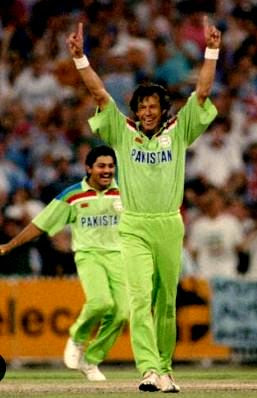
5. Imran Khan

Pakistan clinched the 50-over World Cup held in Australia in 1992 under the captaincy of Imran Khan. Imran Khan was known for the reverse swing bowling. He could generate a good pace and swing with the ball. In Test format, he scored 3807 runs at an average of 37.69. He managed to take 362 wickets at a great average of 22.81. In the ODI format, he took 182 wickets and scored 3,709 runs. Unlike many of his contemporaries, Imran Khan managed to score heavily or take wickets even at the fag end of his career.

Imran Khan


6. Gary Sobers

Exceptional bowler, an aggressive batsman, and a great fielder. Sir Garfield Sobers was truly a great all-rounder. In 93 Test matches, he amassed 8,032 runs at an admirable average of 57.78. His highest score of 365* came against Pakistan at Kingston in 1958.  He scored 26 centuries in test cricket but got to play only 1 ODI match. He played his last test match in 1974, and at that time ODI cricket was not very popular. Interestingly, Sobers was selected to the West Indies team as a bowler. He has a tally of 235 wickets at an average of 34.

Garry Sobers


7. Keith Miller

Keith Miller was an Australian Fire Force Pilot and an Australian Rules Footballer apart from being a Test Cricket all-rounder. The ‘Golden Boy’ scored 2,958 runs in 55 test matches at an average of 36.97 with the help of 7 centuries and 13 half-centuries. He also managed to take 170 wickets at an average of 22.97.

Keith Miller


Test Players Who Failed to Excel in ODIs


1. Cheteshwar Pujara

Cheteshwar Pujara is a prominent name in Indian Test Cricket. The name was first heard when the young boy from Saurashtra scored a triple century at the under-14 level. He later scored a double hundred against England at the under-19 level. He made his test debut against Australia in 2010. Pujara was lbw for just 4 runs in the first innings but went on to become the fifth Indian to score a 4th innings half-century on debut when he scored 72 runs off 89 deliveries. Pujara was known for his sedative long innings in test matches. The technique lacked the beauty of Sachin or Dravid but was very effective even against mighty opponents in overseas conditions. From 103 test matches, he has scored 7195 r4ns at an average of 43.61. He has scored 19 centuries and 3 double hundreds.

But Pujara was never preferred for the ODI format. He has played just 5 ODIs and scored just 51 runs with 27 being the highest score. Pujara was always destined for the longer format of the game.


 2. VVS Laxman

VVS Laxman was the the mainstay of Indian middle order in test matches during the early 2000s. He was known for his elegant stroke play. The wristy shots often resembled the likes of Gundappa Vishwanath. Australia was his favorite opponent. He scored at an average of 44.14 in Australia. His average was 47 in the West Indies. He scored an average of above 50 on Indian soil. His 281 against Australia at Eden Gardens in Kolkata against Australia is one of the finest innings in Test cricket. Laxman scored 8781 runs at an average of 45.97.

But Laxman failed to create the same buzz in ODI cricket. Even though he played 86 ODI matches, he never got to play a World Cup match. He scored 2338 runs at an average of just 30.76 with a highest score of 131.


3. Mark Butcher

The English batsman made his test debut in the 1997 Ashes test series. He went on to play 71 test matches and scored 4,288 runs at an average of 34.58. He scored 8 centuries and 23 half-centuries with a top score of 173*. But with the rise of Marcus Trescotick, Mark Butcher lost his place in the team But Mark Butcher never got a chance to represent England in ODI format.


4. Justin Langer

Justin Langer made a formidable opening pair with Mathew Hayden in tests. Justin Langer scored 7,696 runs at an average of 45.27 from 105 tests. But despite his achievements in test matches he got to play just 8 ODI matches for Australia.

In his 100th test, Langer was hit by a bouncer off Makhaya Ntini and was rushed to hospital for scans. But despite being advised not to play in the match, he returned and was adamant to take the field, if needed. But fortunately, Bret Lee scored the winning runs and Langer was not needed to bat.

5. Thilan Samaraweera

 Thilan Samaraweera started off his career as an off-spinner who could bat. But he went on to become a prominent Test batsman for Srilanka. He played 81 tests for Srilanka and scored 5,462 runs at an average of 48.76. In the test, he scored 14 centuries and 30 half-centuries, with a top score of 231. But he was not a regular face in the ODI setup. He played 53 ODIs but averaged below 28. He was wounded by bullet firing by terrorists on the way to Gaddafi stadium in Lahore.


6. Dean Elgar

Interestingly, Dean Elgar made his ODI debut before his Test debut. Dean Elgar made his ODI debut against England in August 2012. In the same year, he made his Test debut against Australia in November. Dean Elgar was also appointed as South African captain, after the retirement of Quinton De Kock. Dean Elgar had his problems against spin in the initial days. He is currently part of the South African test team. He has so far scored 5,146 runs from 84 tests at an average of 37.28, which includes 13 centuries and 23 half-centuries. Elgar played in just 8 ODIs and scored 104 runs at a mediocre average of 17.33.


7. Yasir Shah

 The leg spinner from Pakistan holds the record for fastest to reach 200 test wickets. Even though he made his ODI debut in 2011, he had to wait till 2014, to make his test debut. The doors to the test arena opened up for him when Saeed Ajmal was banned due to his illegal action. From 48 test matches, he took 244wickets. But in 25 ODI matches, he has just 24 wickets, and that too at a non-viable average of 47.91.


8. Nathan Lyon

For someone who has featured in 123 tests for Australia, 29 ODIs seems to be a mediocre record. Nathan Lyon has been a regular face in the Australian test bowling attack, since the retirement of Shane Warne. From 123 Test matches, he picked up 501 test wickets at an average of 30.8. In ODIs, he picked up 29 wickets in as many matches at an average of 46.


Karun Nair

The game of cricket has witnessed success, failures and some phenomenal comebacks of different cricketers. The cricketing fraternity witness...